Showing posts with label leaf mulch. Show all posts

Monday, October 1, 2012

October 1, 2012

The count is in:  we grew more than 80 pumpkins and squash.
We grew so many pumpkins and squash this year, we ended up dumping a pile by our front tree when we ran out of room to display them around the house and yard.  The pumpkin patch had to get pulled so we have room to plant next year's garlic.  In all, we tilled 1,200 sq. ft. of garden space, wiping it clean to prepare for winter.  Half of this will be sown with red clover seed, and half will be covered with cardboard and fallen leaves through which we plant next Spring.

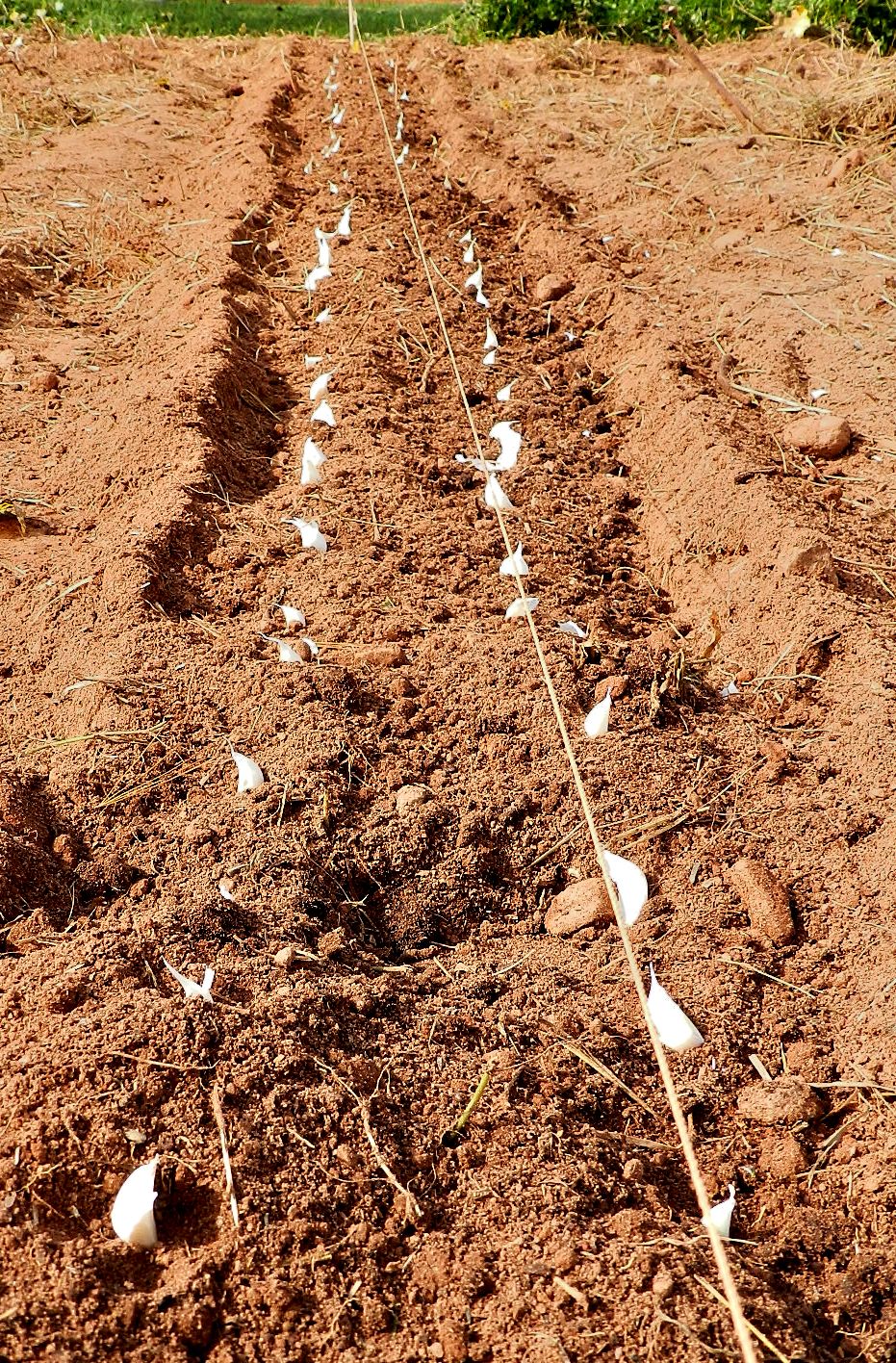
Individual garlic cloves spaced
for planting across a 20-ft. row.
Just over one week into official autumn, we're seeing individual trees starting the annual color show; some sugar maples have joined the scene with strong hints of red-orange.  There are lots of fun local events scheduled, as last year's article on Pumpkintown's annual Pumpkin Festival will show; the festival this year will be held Saturday October 13.

It's time to withhold water from Dutch hybrid amaryllis bulbs and bring them indoors for forcing after the holidays.  Spring bulbs such as tulips, hyacinths, and daffodils can be planted outdoors.  With the likelihood of frost arriving by the end of this month, a flurry of chores need to be finished, like cleaning and oiling garden tools for winter storage.

Cabbage, broccoli, and brussels sprouts grow large, seen through blackened sunflower stalks.

Monday, October 31, 2011

Brussels sprouts forming in each stem node
The mornings are getting frosty now; at our location, first frost came on October 21 – in some places we saw freezing fog hovering over low areas.  But the 30th was our first official freeze at 30 degrees F, signaling the end of the growing season for any tender vegetation.  What a difference seven days has made for the annual foliage show!  We are near peak with good autumn weather in the forecast, so those red, orange, and golden streamers should hold on for a while yet even as the most stubborn green oaks turn and join the show.

Our cold-weather crops seem to be unaffected and are increasing in size; cabbage will tolerate a normal frost but will not last when temperatures dip into the 20’s F.  Brussels sprouts are on schedule for a Christmas first harvest.  We have a good stand of red clover which we are using as a cover crop for next year’s corn.

A good stand of red clover will make a great green manure
crop for corn next growing season.
This is last chance to plant garlic in the South, and we confess this turn of the year has kept us so busy with autumn activities that we’ve put it off a little longer than usual.  We will be making that a priority this week.  We saved several of the largest garlic heads from last year and will split them into individual cloves to plant as seed.  Garlic purchased from the store works just as well as seed garlic – in fact that was one of our garden experiments that has turned into a staple for us; we’re now growing the 5th generation of garlic from that original grocery store variety.  Garlic likes rich, loose soil, so we will haul out the tiller and incorporate a lot of milled sphagnum peat moss and some organic fertilizer in the row before we plant. We keep this loosely mulched with fall leaves after it sprouts.

Our Fall/Winter garden; the open space is saved for spinach and peas next Spring.
Our compost bin is more stuffed than a Thanksgiving turkey, and aside from those winter “regulars” we can dust off our hands from another gardening season.  It’s time to tuck next year’s garden in for the winter, and we’re already covering it with a layer of cardboard and fallen leaves through which we will plant next year.  It looks like we will have one more update in November to finish for the year 2011.

Monday, August 15, 2011

August 15, 2011

A corn shock stands guard over late-season tomatoes.
August's full moon (Saturday the 13th) is sometimes referred to as the full "corn moon" because it coincides with corn harvest in the Northern Hemisphere.  Our sweet corn is long gone - in fact we pulled some out of the freezer recently to try what we froze on the cob.  It looked like garden fresh, and though it was soft, it still had that homegrown flavor.  Hard to believe the next full moon will be the "harvest moon" on September 12.  If the moon has any influence on seed sprouting, our future cabbage crop will attest, because the seed packet said germination takes 12 - 14 days, but it was up in 2!

By now we're trying to invent new and interesting uses for vegetables that are growing a little old from overuse to the palette.  Many garden vegetables have come to a stop, however, and we can begin some clean-up.  The summer season has ended for lettuce, onions, garlic, broccoli, melons, cucumbers, corn, beans, sunflowers, and some of the annual herbs.  Tomatoes are no longer coming in large quantities, but sweet and hot peppers are rejuvenating after the hottest part of summer and will bear again in September.  Zucchini is becoming a steady producer while we wait, and in the meantime a carrot crop sits underground if we want a change of pace.  The majority of our summer harvest is gathered and preserved, so as we take a little break for the present we can look forward to next month's pumpkins and winter squash, apples, grapes, late season raspberries, root crops, and sweet potatoes.

Close-up of Roma paste tomatoes ripening on the bush.
While we're thinking of garden clean-up, it is time to begin securing cardboard boxes to use as mulch.  The weed problem this year turned rather severe in our first-year garden, so all efforts will be directed at smothering it as soon as our old plants are out of the way.  Lawn clippings and fallen leaves can be piled on top of cardboard to make a fairly impenetrable weed mulch through which we can plant next Spring.  Does your community lawn and garden store carry cover crop seed such as red clover and winter rye?  Depending on where you live, September or October is time to plant.  Now is a good time to call and order if necessary.  Garlic for fall planting can be purchased from mail order catalogs, or, wait and buy common white garlic from any grocery store; if left in a warm room it may begin to sprout, and individual cloves can be planted out in October.

Our goal this weekend was to till so we can begin preparing soil for fall planting.  Brussels sprouts plants are being conditioned to the outdoor climate starting in a shady spot.  It's time to check that compost pile and give it a turn after adding a summer's worth of imperfect vegetables, rinds, and cobs.  We will soon be filling it to the brim with discarded vegetable plants.  Have you ever stopped to notice how much activity there is in a garden this time of year?  While pausing to wipe our brows, we saw hundreds of dragonflies, large green-brown locust, chirping black crickets, and several varieties of bees and butterflies in constant hum over our plants.

Monday, April 25, 2011

April 25, 2011

What a long way we've come since February!  In two months' time, we've fleshed out the bare bones of the vegetable garden.  Green onions are now ready for harvest (the rest will be left to fatten into bulbs); spinach and lettuce are producing well, and these herbs are ready to toss into our culinary makings:  rosemary, chives, sage, Greek oregano, tarragon, thyme, mint.  Garlic scapes, the rage of high-end gourmets, are here; if you don't know what all the fuss is about, try an internet search for details and recipes.  We love adding them to eggs, sautés, and garnishes because of their fresh, light garlic flavor, unlike anything we've tried from a grocery store.

Transplanting is almost finished; Bryan moved all varieties of tomatoes, peppers, and herbs dill and basil into their permanent growing locations in the garden.  We quickly ran out of milk jug covers for all these plants, but the broccoli have adjusted and are growing so well they were ready to relinquish theirs to be reused on others.  That master garden plan drawn up and dreamed over in January is finally coming to life.  This Saturday, Bryan made a trip to Whispering Pines Stables in an experiment to see just how smelly he can make our SUV!  Not really, but he did find plenty of fully composted and garden-ready horse manure which he brought back in buckets.

High temperature more consistently in the 80's F is warming the soil so that cucumbers, cantaloupe and honeydew melons, zucchini, squash, green beans, and corn will now readily sprout.  We plant way too much of this stuff to finish in one weekend, so sections of the garden are divvied up and each planted on a schedule.  Coming up this week are the vine crops, cucumbers, and melons.  We leave our cardboard and leaf mulch in place to discourage weeds and to keep developing fruit off the soil.  This way we do not have to till and disrupt soil structure underneath (keeping those earth worms happy!)  We simply pull a circle of leaves away from the planting mound, dig in lots of composted manure, and plant our seeds on top.

 Don't miss it!  Coming next month:  our attempt at growing the Great Pumpkin.  In summer 2009 Bryan grew this 83-pound Bix Max, and that was only the start of the fun.  This year we have Prizewinner seeds, and it will take all the right conditions - water, nutrients, and weather, to make a heavyweight that beats our previous record!

About Me

My photo
Dedicated to the responsible production and preservation of healthy home-grown food to the glory of God. Isaiah 55:10 The rain cometh down, and the snow from heaven, and returneth not thither, but watereth the earth, and maketh it bring forth and bud, that it may give seed to the sower, and bread to the eater. Organic, or not? We try to raise vegetables organically, using compost and manure. The addition of chickens to our hobby farm means plenty of organic nitrogen to compost! This site gives credible reference to planting information contained in the Farmer's Almanac (www.farmersalmanac.com).