Showing posts with label brussels sprouts. Show all posts

Monday, November 5, 2012

Last post for 2012

Parsley in front, and a row of garlic behind, with brassicas in the top left; half of the garden is
tucked in for winter underneath a layer of cardboard and fallen leaves.
First frost was also a killing frost for us, on Thursday morning November 1st.  Any tender vegetation that was not freeze tolerant turned black in the morning sun.  Nearly half of the vegetable garden is tucked in for winter, underneath a layer of cardboard and fallen leaves.  Parsley is still growing, bright green, to add to our late fall soups; one-third of our cabbage heads have been harvested.  Brussels sprouts increase in size, while our future corn patch is really turning green with clover.
One-third of our cabbage is harvested.
The change back to standard time has returned us to long nights.  Another growing season has come and gone; we're looking forward to enjoying our preserved harvests through the coming holidays.  The garden will remain essentially as it is now until February, when we prepare for planting early spinach. Thank you for enjoying the season with us!

The garden in November.

Monday, October 29, 2012

October 29, 2012

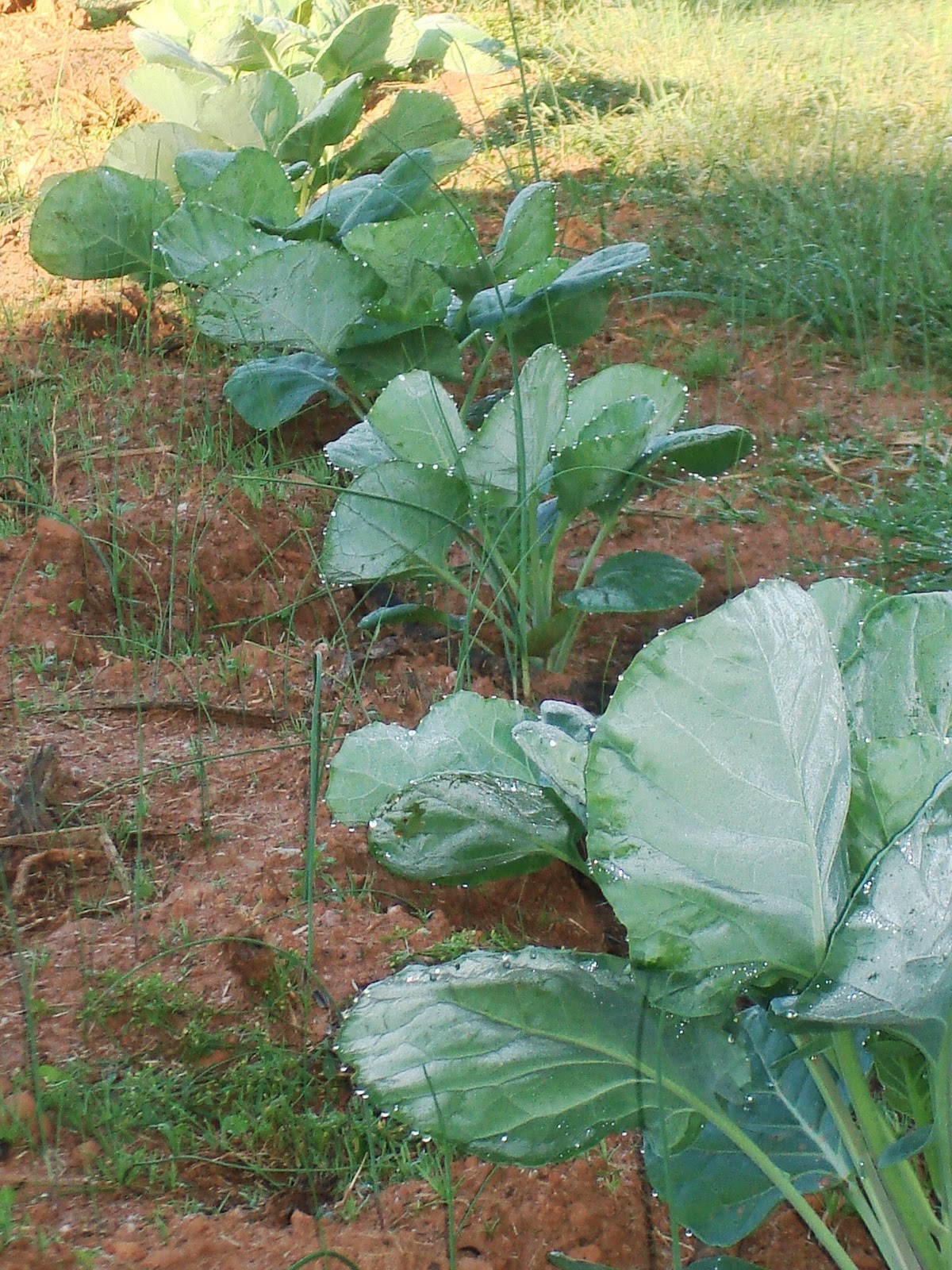
Cabbage heads ready to cut.
As October comes to a close we still haven't observed a frost, though some nights have been very close.  A warming trend last week felt like Indian Summer, highlighted with spectacular trees showing off their searing reds and flaming oranges.  Many trees have begun to drop their leaves, while others are still green meaning we have a few weeks left of fall foliage to enjoy.

Red clover, our green manure cover crop, has begun
to spread out over our future corn patch.
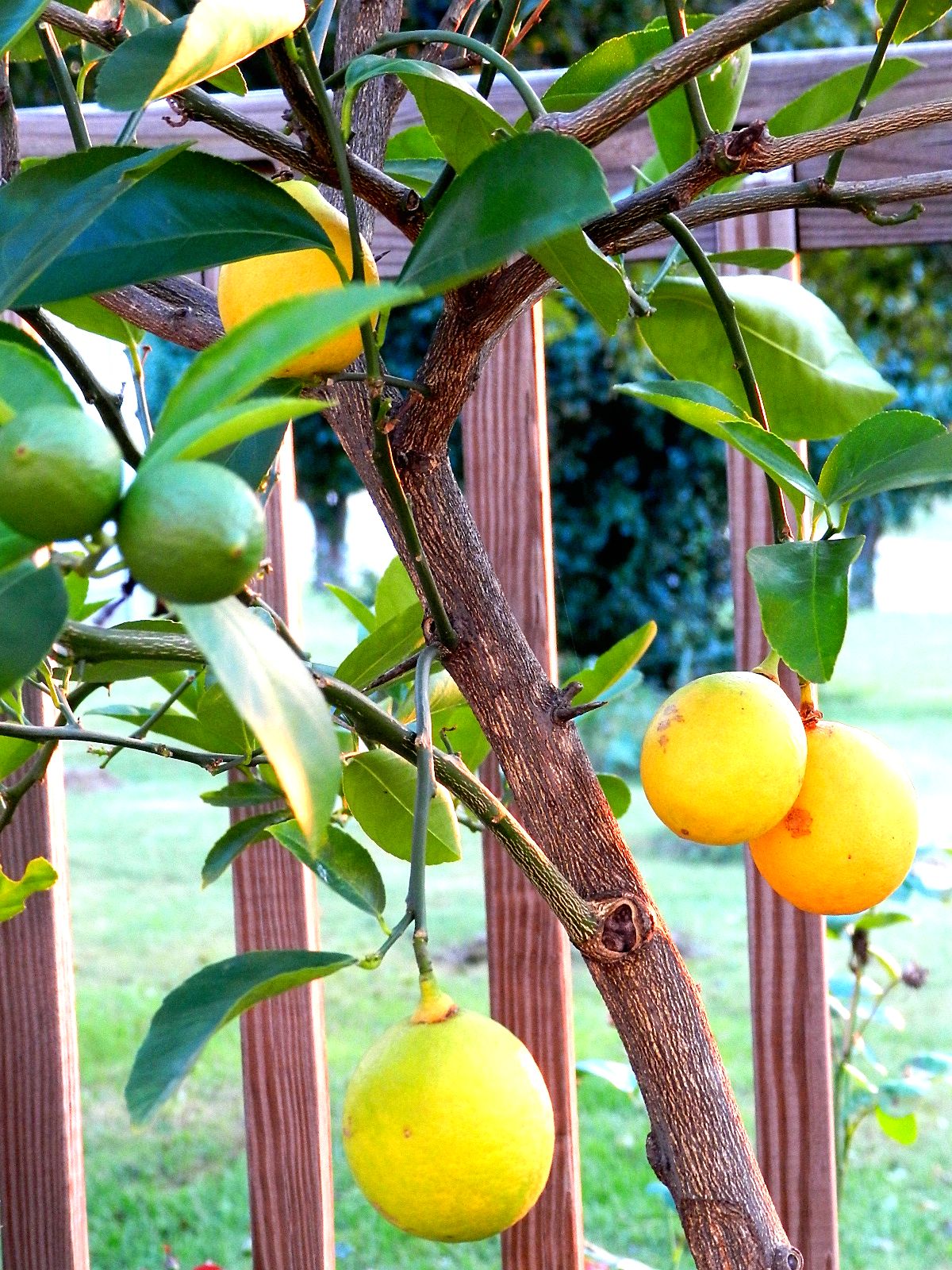
Though our cherry and peach trees have decided it's time to go dormant, the growing season continues for cool weather crops.  Our Meyer lemon tree is putting on a show of white blossoms which are adding citrus perfume to the dry earthy musk of fallen leaves.  Soon, we will be bringing our potted plants indoors for the winter.

We harvested just about all our broccoli and put up 21 quarts in the freezer.  The 'Pacman' variety continues to send up smaller side shoots after its main crop is harvested.  It's time to turn our attention to cabbage; it's a real pleasure having fresh green organic vegetables in abundance to enjoy as daylight diminishes.  Brussels sprouts have finally made an appearance and are on track for an early harvest, perhaps by Thanksgiving.
Brussels sprouts have begun forming in each stem node.

Monday, September 24, 2012

September 24, 2012

Meyer lemon tree ripens fruit.
It's about time to pull up those old summer border flowers and replace them with chrysanthemums and pansies.  Wild garlic is starting to sprout after its summer hibernation underground; its tell-tale aroma is noticeable when mowing the lawn.  That means any time now we could plant the largest of our hardneck garlic cloves saved from May's harvest, to grow through the winter.  Last year, we didn't plant our garlic until late October, and we're determined to get an earlier start.  The pumpkins have to come out first, however, to make room, and that's a chore - vines have spread everywhere and are setting new fruits.  Did you know that tender green pumpkins can be eaten just like zucchini?
Gladiolus bulbs harvested and curing
for winter storage.

As soon as our summer vegetable patch can be tilled, we will be broadcasting several pounds of red clover seed purchased from the local feed and seed store.  If you've been reading this blog regularly, you know that red clover is our favorite green manure crop because it converts nitrogen from the air and stores it, boosting both soil nutrition and adding plenty of organic humus.

Cabbage and broccoli have taken off, growing to mature size.  Tiny button heads of broccoli are visible in the crown of each plant.  Depending on how much moisture we see in the coming weeks, it won't be long.  Brussels sprouts take 120 days to harvest, longer than many pumpkins; transplanted in August, they won't begin to produce until December.

Broccoli and cabbage plants.

Monday, September 10, 2012

September 10, 2012

Brussels sprouts, broccoli, and cabbage mulched
with fresh lawn trimmings.
One valuable item our property is producing with wild abandon in these early days of a wet September is grass - a whole acre of it!  For once we have much more than we need to mulch our new cole crops, which are coming along very nicely after transplanting.  We have a lot of dry, brown carbon materials in our compost bin right now, so the wet green nitrogen in grass will be a perfect combination to help boost our compost output.

Red bell peppers finish ripening.
We are very close to the end of our summer vegetable patch.  All summer long we have been gathering fallen sticks, prunings and trimmings in a big brush pile 10 ft. long x 5 ft. wide x 5 ft. high.  If we get a dry week, we will move it to the garden and burn - removing and killing surface weed seeds, and adding potash to the soil.  Next month we will plant red clover in anticipation of rotating our corn crop over where the vegetable garden was this year.

The garden in September.  A large Prizewinner pumpkin matures in the top-right corner.


Monday, August 27, 2012

August 27, 2012

A Prizewinner pumpkin grows large and orange-red as summer comes to an end.
It's time to get rid of the old to make room for the new.  Two hundred eighty-eight corn stalks were macheted at ground level, clearing a 20 ft. x 25 ft. space that will be our fall and winter vegetable garden.  The tiller evened things out, and any weeds quickly wilted in these sunny and dry days of late August.
Corn stalks dry after being cut.

The 2013 Farmer's Almanac calls for a colder than normal winter with above average precipitation for the eastern two-thirds of the nation.  Unseasonably chilly temperatures will reach as far south as the Gulf Coast.  Last winter was so warm because of a most unusual combination of a North Atlantic and Arctic Oscillation that pulled warm air up from the Southwest, and a La Nina that kept the jet stream far north.  Last winter was ideal for gardening year-round, but this winter looks to be different. So we are taking advantage of the remarkably cool August to get our fall garden in early.  Nine brussels sprouts transplants were moved to the garden under milk jug covers - not to keep the frost out, but to shield from hot sun and hungry insects.  Cabbage, broccoli, root crops and greens will soon follow.  Since grass mow is so thick, it will make an ideal mulch to keep weeds down around our new plants.
A bucket of compost went into
each planting hole

Superfreak pumpkins have an interesting appearance.
We have counted at least 50 pumpkins ripening in our patch, and more are setting daily.  We are almost ready to go through and cut everything orange from the vine.  A prizewinner giant is almost red; it really stands out among the smaller varieties.  These will soon be moved with hay bales under our front yard maple tree.

Brussels sprouts transplants underneath protective milk jug covers.

Monday, August 13, 2012

August 13, 2012

August is the month of sunflowers.
Our harvests are getting smaller, but often more interesting; for example, the handful of red raspberries we picked to eat with a honeydew melon and a nice fat fig.  These combinations would never be conceivable if we weren't growing them ourselves.  'Heritage' red raspberries, which are labeled "everbearing," are just getting started on their big fall crop; we don't have to cover these in bird netting like we did with our spring berries; birds are done raising young, which have fledged and focused on protein diet of insects before the winter.

2nd-year parsley, heavy with seed, bends to the ground.
The dog days of summer are over.  We received another 5 inches of rain this week, giving us a two-week total at 9.5 inches; I think it rained every day in the past two weeks and don't remember as significant a wet period since the summer it rained 40 days in a row in 2005.  Needless to say, we're about ready to pull up our soaker hoses and mow down the melon patch.  One of the most appealing qualities of the garden this time of year is its disarray.  Plants are overgrown, blowzy, and wild--and that's part of what keeps our interest.

Brussels sprouts seedlings through
the screen of an airy window.
Folks often incorrectly assume that spring and summer are the prime gardening seasons and that the beginning of fall brings an end to the garden's glory.  But as fall rains return and the lawns green up again, the nights are cooler and the sun seems softer, we have time to catch up on a crop of brassicas and greens.  Cole crops such as broccoli, cabbage, and brussels sprouts perform just as well as in the spring.  Didn't get that crop of April spinach that you were hoping for?  Try it now.  Since the days are often hot, it will help to sprout seeds under a 2x4 laid directly on top of the ground, but check underneath every day.  Our brussels sprouts started from seed in early July will be ready to transplant out to the garden by the end of this month.  It's time to start cabbage and broccoli seed now too.

Seed-saving is in full operation as we select the best heirloom tomatoes, peppers, and herbs.

Pumpkins ripen in these warm and humid August days.

Monday, July 16, 2012

July 16, 2012

Pumpkin, gourd, and squash fruits are setting.
Can you guess this vegetable?
Part of our corn harvest.
Brussels sprouts seed planted a week ago are unfurling two green cotyledons (the first embryonic leaves) on a window ledge in our barn, where they are protected from voracious green worms, but receive plenty of sunshine for stocky growth.

All heirloom paste tomatoes.
This week meant corn and tomatoes in a BIG way.  The first half of our corn patch (20 ft. x 12 ft) came ripe; we went through and picked well above 200 ears.  The number 200 is our standard, benchmark, goal for corn production; it means we had a really good year.  Cut off the cob, we froze 24 quarts.  Earlier last month, the SC State Climatology Office reported that corn across the state was growing so well it looked "fake" (see note 1 below).  We could certainly say the same is true here, especially after our week of generous rains.  Corn crop two is topping out taller than crop one, and is now in silk; it will be ready to harvest by August 4.


The garden looks like a jungle after last week.  We will be canning tomatoes on a weekly basis through July, and when we get tired of canning them whole, we will put them through our strainer/sauce maker for thick, rich sauce.


Melons are still swelling, but they aren't hinting of turning ripe.  Pumpkins are setting every day, and one of our Prizewinner giants has set fruit; we will allow it to set up to three fruits before determining the best one to leave on the vine to mature into a hopeful 100-pound pumpkin.  


As part of routine maintenance this weekend, we summer pruned all our peach and apple trees to remove water sprouts and crossing branches.  And if that wasn't enough to do, we pulled and cleaned our onion crop, which is now curing on a shelf in the barn.
"The walkway."  Pumpkin vines have claimed our pea fence to the left
and make the walk to our orchard kind of cozy.
Experienced gardeners may guess:  it's a bloated, ripe cucumber!  Eastern European homesteaders
settling the plains would slice a yellow cucumber in a pail of fresh milk for a cooling
and nutritious summer meal.


Note 1 - http://www.dnr.sc.gov/climate/sco/ClimateData/weekly/wk061712.php


Monday, March 19, 2012

March 19, 2012

Swiss Chard planted last September gives us
greens while we wait for spinach.
Spring has come and is on the way out before the calendar says it arrived at all.  Everything is happening a week ahead of last year, and last year was two weeks ahead of normal schedule.  Peach and cherry trees are finished blooming, and apple trees are budding out.  There was no time to waste during our 80-degree weekend since everything seems to be on an accelerated schedule.    It left us feeling truly breathless. 

Broccoli under milk jug covers.
Tomatoes, dill, and basil are sprouting indoors while this list of chores were accomplished:
1.  Planted 50 ft. of sprouted pea seeds.
2.  Planted 50 strawberry plants.
3.  Transplanted 8 broccoli plants into the garden.
4.  Transplanted bell peppers to larger cups.
5.  Pulled all brussels sprouts plants; cleaned, blanched, and froze 6 quarts.
Brussels sprouts on several stems.


We've managed to tune the lawnmower since the lawn needed an early cut, and the tiller is next.  Red clover is reaching skyward about an inch a day, and it's just about the height it was last year when we tilled it under.  Last year we used "red" clover (named red because that's the color of its blossoms, but we don't let it go to seed) as a green manure or cover crop because it fixes nitrogen in the soil.  After incorporating it into terrible subdivision soil, we had the best corn crop we've ever seen!
Peach blossoms on the way out one week ahead of last year.

Monday, October 3, 2011

October 3, 2011

The first of October brought gorgeous autumn temperatures, cooler than any we've seen since April. We made a garden bonfire and reduced to ashes all our corn stalks and dried woody plants, then tilled it under— Bryan tilled 1,125 sq. ft. all together. This wiped the garden clean like an etch-a-sketch. Two pounds of red clover seed was scattered over one 500 sq. ft. section and raked in, to germinate after the next rain.

Most of the garden has been tilled clean.

We've amassed quite a lot of cardboard to lay over the other part, all except for one row where garlic will grow through the winter. We noticed some of our garlic developed rot in this heavy soil, but it may also have been introduced by using some moldy manure last fall. So to be extra careful this year we will be adding a fair amount of milled sphagnum peat moss which both lightens soil and resists rot. We saved "seed garlic," three or so of the largest heads we harvested last May, to plant this month.  

Brussels sprouts spread their leaves.
The fall garden is really showing up as beets, greens, and carrots fill in empty dirt spaces; brussels sprouts and cabbage are spreading, too. After a good soaking rain last week a bunch of weed seedlings sprouted that will need to be pulled before they crowd out over good plants. By the looks of that lettuce, we could have homegrown salads by next week.

mixed greens in the early morning sun

Monday, August 8, 2011

August 8, 2011


Drying corn stalks bundled into shocks
make way for Fall vegetables
 A total of 34 melons have ripened since mid-July, some were better than others depending on where they were attached on the vine; a few more will ripen one at a time through this month, and new fruits are setting that will last into October - one of the nice aspects of gardening with a long growing season.  Garden activity has slowed to a trickle - literally - because late summer heat quickly absorbs moisture out of the ground, and soaker hoses have been a necessity.  By the time we head outdoors to pick vegetables, a bold orange sun has slid behind distant trees, and evening air is permeated with that heavy August scent of musky grass mow, drying corn, and ripe vegetables. 

We are four weeks out from planting Fall crops, and our Fall/Spring vegetable patch will be located where sweet corn was this summer.  To create open space, we pulled up half the corn stalks and bundled them together.  White potatoes are still sprawling on the outside edge of the corn patch, some with vines up to four feet in length.  We were careful to leave them alone, although we have dug some new potatoes already.  Brussels sprouts seedlings were transplanted into individual pots, and will be slowly adjusted to outdoor conditions after they strengthen.  Cabbage seed was sown indoors.  We will soon till and prepare soil for carrots, lettuce, and other cool weather crops which will be direct-sown into the garden come the first of September.
The vegetable garden in August

Tomatoes are still coming a plenty, though not in the volume we saw in July.  Anything we harvest this month is considered bonus.  August is a good month for seed-saving:  old lettuce plants with branched and feathery seed heads, heirloom tomatoes, even carrots that sent up stalks with flowers.  To keep birds from eating sunflower seeds, we use the old nylon hose method, stretching fabric across the heads we want to save.  We make sure to leave lots of sunflowers for our feathery friends, who love to perch on top of a drying flower to peck out a nutty meal.

Jack-Be-Little pumpkins on the pea fence

Pumpkins are ripening but will be left on the vine until their stems turn dry and brown.  Each orange gourd cures in the sun, toughening its outer skin, to help it last through the Autumn season.  The gourds we do not sell or eat often keep for 8 months until next Spring.  These mini pumpkins sell for $1 each at the annual Pumpkin Festival in Pumpkintown, SC, second Saturday of October.

Monday, July 11, 2011

July 11, 2011

Welcome to the dog days of summer--we're feeling it.  The first of July brought red ripe tomatoes and a bushel of bell peppers; sweet corn was not long behind.  Harvest baskets like these are becoming a daily event--the culmination of summer rain and sunshine, organic practices, and season-long planning.  Organic is not always as romantic as vibrant photos appear:  we could have pictured the dozen or more bell peppers with insect holes that were relegated to our compost bin; some insect damage is tolerable for the sake of a balanced ecological environment.  (Insecticides kill both bad bugs and the good kind that provide natural pest control and pollination).  Palmetto Acres Garden is producing much more than we can consume fresh, and some planning for the winter-to-come will enable us to enjoy our surplus when the garden is a frozen heap.
 
The bushel of bell peppers were halved or chopped, frozen, and individually wrapped and freezer bagged.  Cucumbers were pickled with dill and garlic and canned in jars.  Green beans are pressure canned in quart jars.  We ensure that everything is harvested at its peak ripeness when it is preserved.  For the present time we are keeping up with corn fresh on the cob and tomatoes in garden spaghetti sauce and salsa.
 
Carrots remain fresh in the ground through winter, so we pull up only what we need.  Still waiting on that first melon, but our first tree-ripened peach was a sweet treat.  Dill seed heads are turning brown and will be saved to plant new dill next year.  Gladiolas are adding to the riot of summer color, masking some of the garden's lush and overgrown appearance.  Pumpkins are setting fruit, soft and green now, but swelling with purpose toward a September harvest. 
 
Too early to think about Fall?  Not if we want brussels sprouts, cabbages, and root crops to enjoy later.  Brussels sprouts take on average 120 days to harvest, so add that up:  it's time to start seed indoors now.  These are one of the few vegetables that can be harvested all winter long.

About Me

My photo
Dedicated to the responsible production and preservation of healthy home-grown food to the glory of God. Isaiah 55:10 The rain cometh down, and the snow from heaven, and returneth not thither, but watereth the earth, and maketh it bring forth and bud, that it may give seed to the sower, and bread to the eater. Organic, or not? We try to raise vegetables organically, using compost and manure. The addition of chickens to our hobby farm means plenty of organic nitrogen to compost! This site gives credible reference to planting information contained in the Farmer's Almanac (www.farmersalmanac.com).